
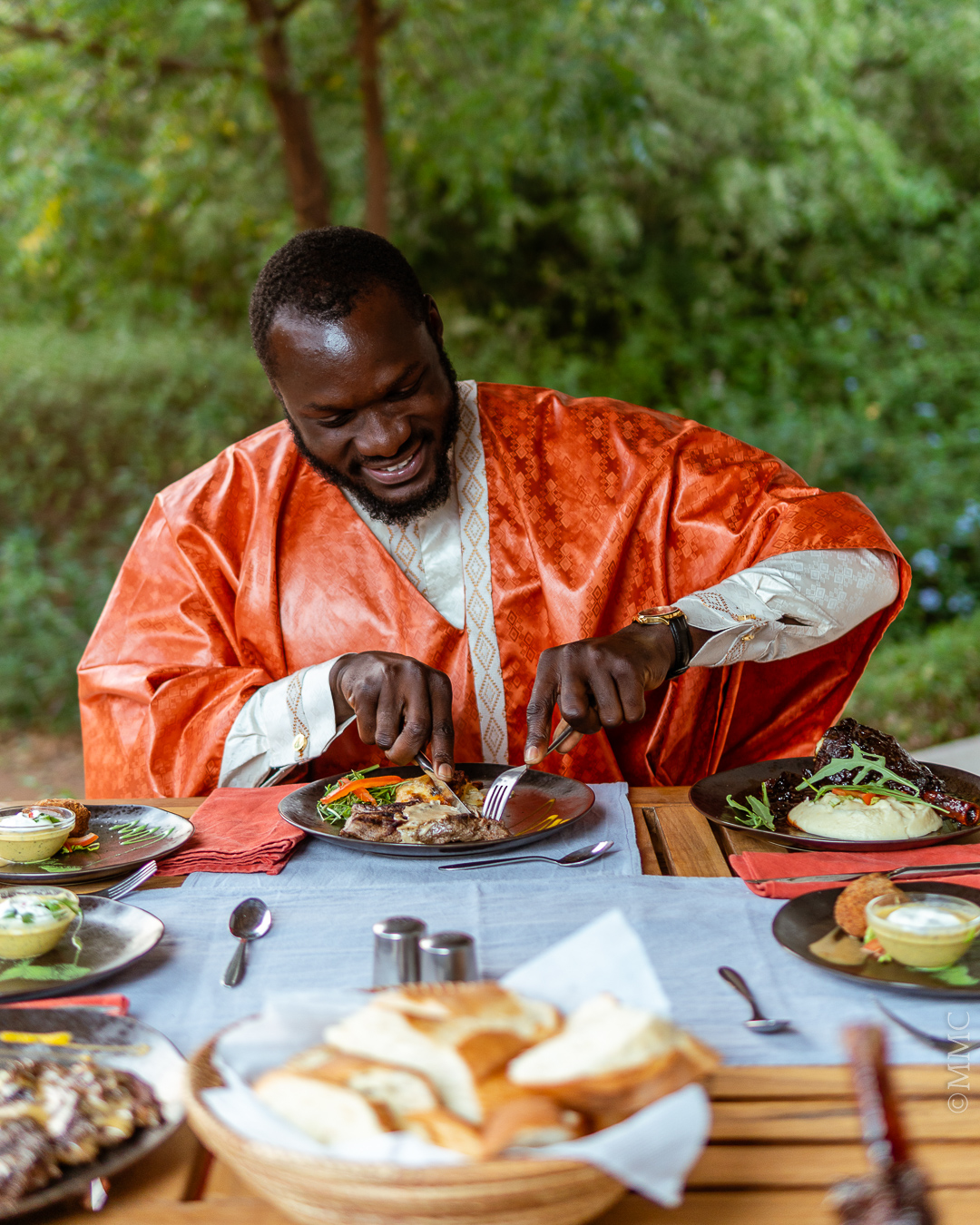
We call Eid El Kebir Tabaski in Senegal.
It’s a highly anticipated holiday, probably the happiest of the year.
It’s difficult to distinguish muslim traditions from cultural traditions in Senegal. They are all so intertwined that it can take one many years to find out that something they thought of as an act of worship was actually just a repetition of their ancestors customs.
Eid El Kebir in Islam commemorates the end of the Hajj ( pilgrimage) and the sacrifice that Prophet Ibrahim (AS) was asked to make.
Allah SWT showed him a dream in which he was sacrificing his son Ismail. A command to which he agreed and so did his son Ismail.
An interesting Tafsir of Numan Ali Khan draws our attention to the fact that Allah SWT Only Tests the One He loves and the greater his love , the greater the test.
Ibrahim’s father who was a disbeliever had abandoned him when he started preaching the one true God and also tried to kill him by joining the people who wanted to burn him alive.
Yet Allah SWT had asked Ibrahim to abandon his son and wife in the desert and was now asking him to kill his son. He was asking him to do to his own son what his father did to him, which probably caused him much grief.
Ibrahim didn’t falter in obeying to both commands and Ar Rahman in return took care of Ismail and her mother in Mecca and blessed his offspring from which almost all prophets came. As of the sacrifice, He Replaced Ismail with a lamb and that is where the tradition of eid sacrifice comes from.
What we are commemorating is therefore our obedience as believers and our Creator’s mercy towards us.
Eid is our holiday. It’s required from muslim to dress nicely, wear new clothes if possible and treat the kids.
In Senegal , it translates to a whole fashion festival , a culinary fiest and memorable family celebrations.
Men and (more and more ) women these days go to the Eid prayer at 9 am fasting, repeting liturgies ( here I a oh Lord here i AM … )
We ask for eeach other’s forgiveness after prayer and pray for longevity with the famous ” Dewenati” which basically means, may we live another year.
We break fast with grilled liver and traditional porridge, then men go in family groups to pay homages to the neighbors while women prepare the meal.
No need to tell you that you can smell grilled meat everywhere in town and that’s what i missed the most when I spent eid in Morocco where people don’t cook the sacrificial meat until the next day.
In Senegalese tradition, every sacrificed sheep is divised in a precise way with a part for the butcher , a part for poor people, a part for your in laws and a part for the family.
After lunch people rest , often nap. They usually dress up after asr prayer (5pm). Kids go around the neighborhood asking for treats and families gather together at the grandparents house.
It’s always a day full of memories, gratitude and hope for the new year to come. It holds my best childhood memories to this day !